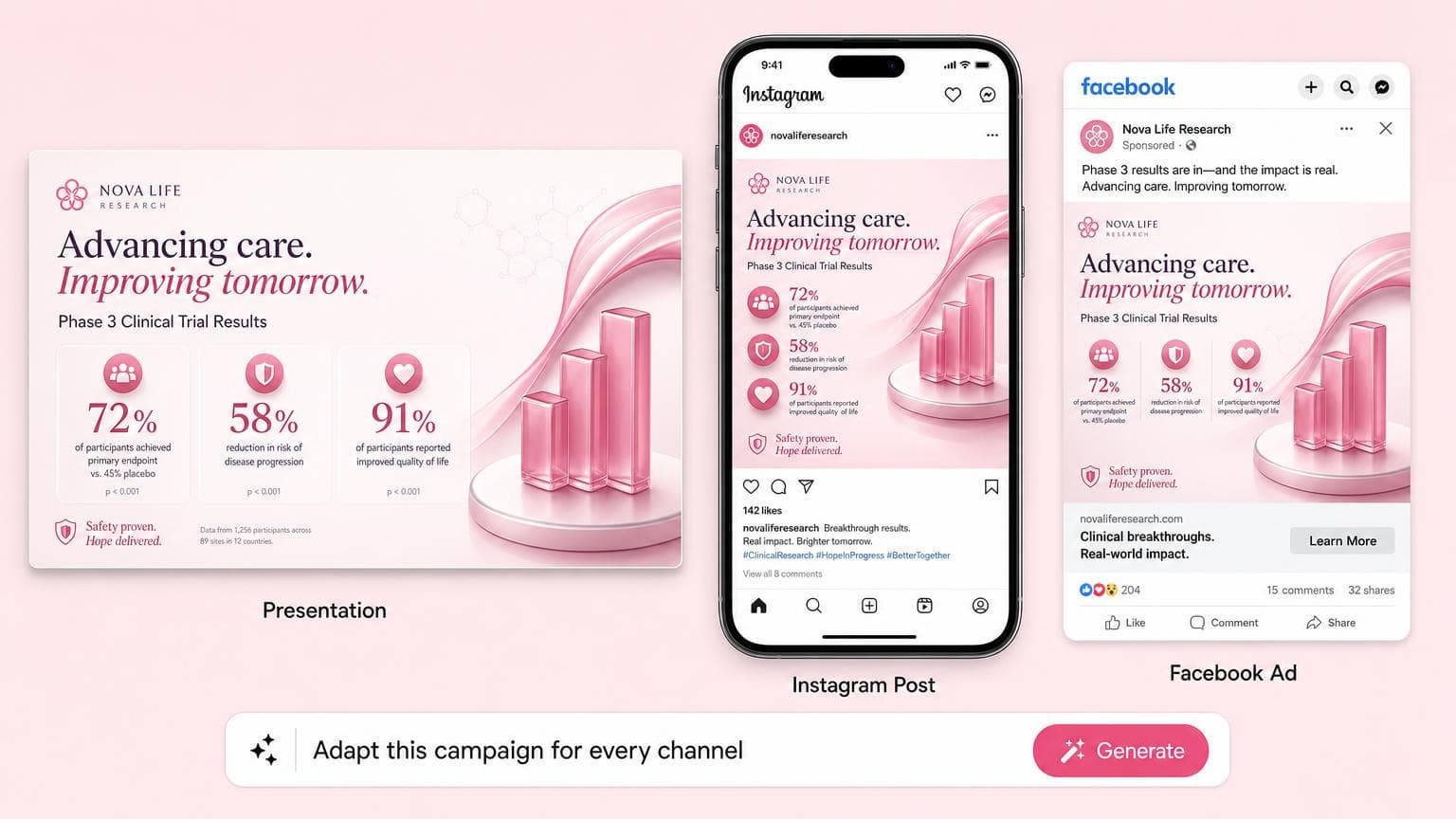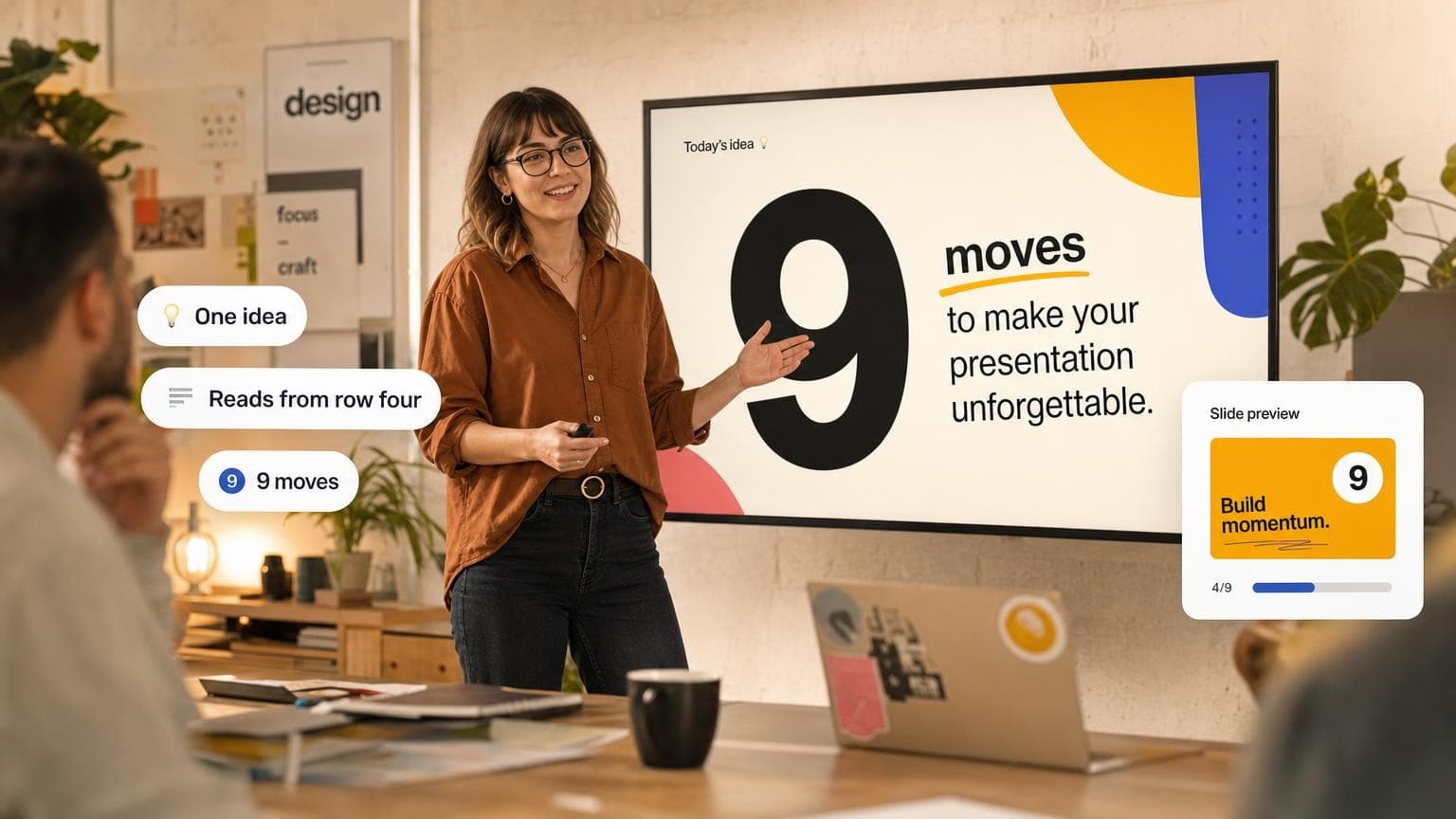


A presentation hook is the first 15–30 seconds of your talk: the line, slide, or moment that earns attention before you explain anything else. Engaging hook examples make the room lean in when something is unfinished, surprising, or aimed at them.
Most decks lose the room on slide one when the opener repeats the title or starts with "Today I'm going to talk about…" You opened with an agenda. Pick one hook type and write the opening around it.
- What makes a hook work
- Four types of opening hooks
- Sales presentation hook examples
- Classroom presentation hook examples
- Pitch deck hook examples
- How to write your own hook
- FAQ
Structure, pacing, and delivery: see What Makes a Good Presentation.
- A hook earns attention in the first 30 seconds; it is not your title slide or agenda - Four reliable types: story, stat, question, and demo - Match the hook to the room: sales needs stakes, classrooms need curiosity, pitches need tension - Write the hook before slide two so your outline supports the opening promise - Test the opener out loud; if it takes more than two sentences, trim it
What makes a presentation hook work
A good hook does three jobs at once:
- Signals relevance. Your audience hears why this talk matters to them.
- Creates tension. A gap, surprise, or unanswered question pulls them into the next slide.
- Sets the frame. Your deck resolves what the hook opened.
A hook that only describes the topic loses them. Name a detail that sparks curiosity, concern, recognition, or disbelief.
Still picking a topic? Browse presentation ideas by audience type first. The hook gets easier when the subject matches the room.
Four types of opening hooks
Openers fall into four buckets. Pick one per talk. Stack all four in the first minute and you blur the opening.
Story hook
Open with a short scene: one person, one moment, one detail your audience recognizes. End the story on a turn that connects to your main point.
Template: "Last [timeframe], [person] [did something familiar]. Then [surprising turn]. That is why [your topic] matters."
Example: "Last quarter, our biggest customer almost churned over a billing email nobody on the product team had read. One sentence in the footer cost us six figures. That is why we rebuilt onboarding around clarity, not features."
Stat hook
Lead with one number that contradicts what the room assumes. Name the source. Translate the stat into a human consequence in the next sentence.
Template: "[X]% of [group] [unexpected outcome]. That means [concrete implication for this audience]."
Example: "Seventy-one percent of B2B buyers say they have already chosen a vendor before the first sales call. That means your deck is not introducing you. It is confirming a decision they are already leaning toward."
Question hook
Ask a question your audience can answer in three seconds. Follow with a claim that reframes their guess.
Template: "What would you guess is [surprising metric or cause]? Most teams say [common answer]. The data says [your angle]."
Example: "What do you think kills more startup pitches: weak financials or weak opening slides? Most founders say financials. Investors we talked to said the first 60 seconds, every time."
Demo hook
Show the outcome before the explanation. A screenshot, prop, before/after, or live product moment beats three bullets about "innovation."
Template: "Before I explain how this works, watch what happens when [user action]." Then show the result.
Example: "Before I walk through the architecture, here is what an analyst sees when fraud spikes." Show the alert screen, pause, then explain.
Sales presentation hook examples
Sales hooks should name pain, stakes, or money within two sentences. Skip the company logo and mission statement on slide one.
Pair a strong opener with a deck built for that buyer. Create a PowerPoint with AI from their PDF or brief so slide two already reflects their industry.
Classroom presentation hook examples
Classroom hooks run on curiosity and participation. Students tune out when slide one is a table of contents.
Need a topic before you write the hook? Start with unique college presentation topics and pick an angle your classmates have not heard yet.
Pitch deck hook examples
Investor and startup hooks compress tension fast. Lead with a problem worth solving.
See how funded decks open in our Shark Tank pitch deck examples and the broader pitch deck library. Slide one is a problem statement more often than a logo wall.
How to write your own hook
Use this checklist before you finalize slide one:
- Pick one hook type from story, stat, question, or demo.
- Write the spoken line first, then design the slide to support it.
- Cut the throat-clearing. Delete "So, um," "Today we'll cover," and "Let me start by introducing myself."
- Check the handoff. Slide two should follow the hook as the next beat.
- Read it aloud. If you run past 30 seconds, shorten the story or swap hook types.
When you build the deck in GenPPT, put the hook in the outline before generation so slide one matches the rest of the narrative. Upload notes or a brief at /app/new, lock the opening line in the outline step, then generate visuals around it.
Frequently asked questions
What is a good hook for a presentation?
Grab attention in the first 30 seconds with a story, surprising stat, participatory question, or demo. Tie it to your main message.
What are examples of engaging hooks?
Try a customer story with a costly twist, one counterintuitive statistic with a source, a question the audience answers in their head, or the product outcome before you explain features. Copy and adapt the templates in this guide.
Should the hook be on slide one?
Yes, in most talks. Slide one supports what you say out loud instead of repeating the title. Some speakers use a blank or bold single-stat slide and deliver the hook while they speak.
How long should a presentation hook be?
Aim for 15–30 spoken seconds, two to four sentences. Keynotes can run longer when the narrative is the talk; business and classroom opens stay tighter.
Can I combine multiple hook types?
Pick one primary hook for the opening. You can weave a stat into a story, but lead with one device so the audience knows why they should keep listening.
What hook works best for sales decks?
Stat and demo hooks work in sales because they tie to money and proof fast. Use a story hook when the buyer's pain is emotional or operational, not only numeric.
Open with intent
Pick one hook type, write two sentences, read them aloud, then design slide one. The opening sets up everything that follows.